
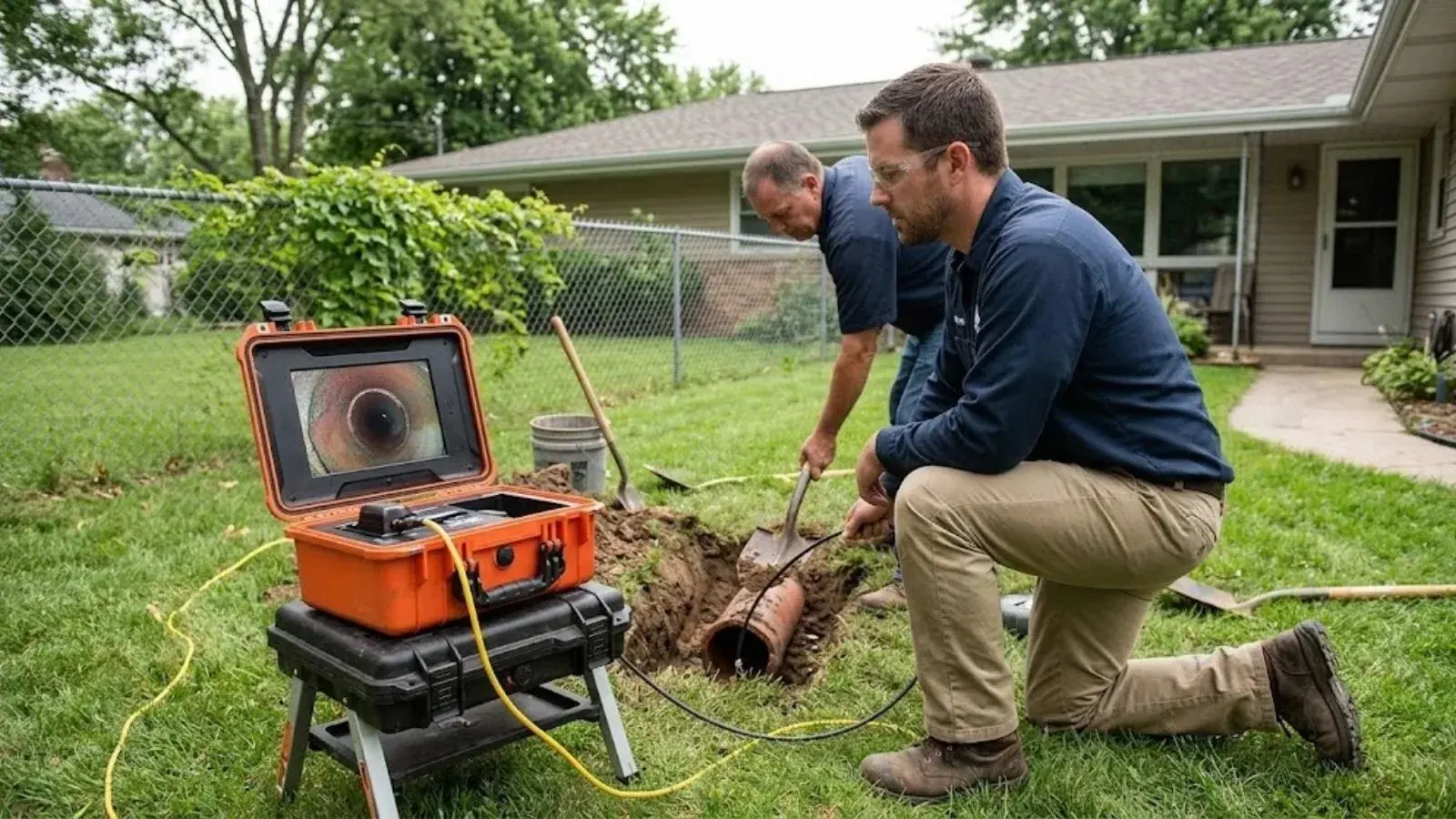
What cracks a sewer line
Age is the biggest factor. Older clay and cast iron laterals crack and separate at joints, and cast iron also scales and thins from the inside. Roots enter through small gaps and then force them wider as they grow.
Ground movement, heavy loads over the line and poor backfill from earlier work can crush or offset a pipe. A belly, where a section sags, collects waste and speeds up damage. Newer plastic pipe can still be cracked by a hard impact or a bad connection.
What affects the price
The depth of the pipe, the length of the damaged section, the surface above it and the method all change the cost. A line under a lawn is cheaper to open than one under a driveway or a patio, and a short spot repair costs far less than a full lateral.
Access matters too. A line with no cleanout, a long run to the street or a connection to the city main raises the work. We give a written price after the camera work, and before any digging begins. Our sewer line repair page lists what the visit includes.
Permits and the city connection
Work on a lateral can involve the city, especially near the connection to the public main. Call the City of Oakdale before you dig to confirm who owns which section and whether a permit or inspection is needed, and we will coordinate on the schedule.
Utility marking is required before digging, and a call to the marking service is free. We handle that step as part of the job, so gas, power and water lines are located before any excavation starts.
Questions to ask a contractor
- Will you show me the camera recording of the damage?
- Why is this repair method right for my pipe and my yard?
- Is the surface restoration included in the price?
- Who handles the permit and the inspection?
Clear answers on those four points tell you a lot about how the job will go. Be wary of a quote that skips the camera step.
After the repair
Ask for a cleanout if the line has none, and ask for a final camera run so you can see the repaired section. Keep the footage with your home records, which helps at resale.
Homeowners in Escalon and Riverbank use the same crews, and a lingering clog can be cleared with sewer line cleaning while you plan the repair.
What the code requires of a repaired lateral
The Uniform Plumbing Code (UPC) and the California Plumbing Code require approved pipe, sound joints and a minimum slope on a building sewer. A camera run after the repair shows whether the new section meets that.
Common questions
Sometimes. Lining or bursting can avoid a full trench when the pipe condition and layout allow, and a camera tells us if it is a fit.
It varies. A hairline crack can leak slowly for years, while a collapse can block the line in days.
Policies differ and many exclude wear and tear. Ask your insurer, and keep camera footage and repair records.
A spot repair can finish in a day. Longer runs take more time, and we give a schedule with the quote.
Homes near the original townsite are more likely to have clay or cast iron laterals, which crack and separate with age. A camera look tells you the actual condition.
Still have a question? Call (855) 575-2890 and talk to a plumber.