
Sewer Inspection in Oakdale, CA
A sewer camera shows what the pipe looks like on the inside: roots, cracks, offsets, bellies and buildup. It turns a guess into a recorded answer, which matters before you buy a house or pay for a dig.
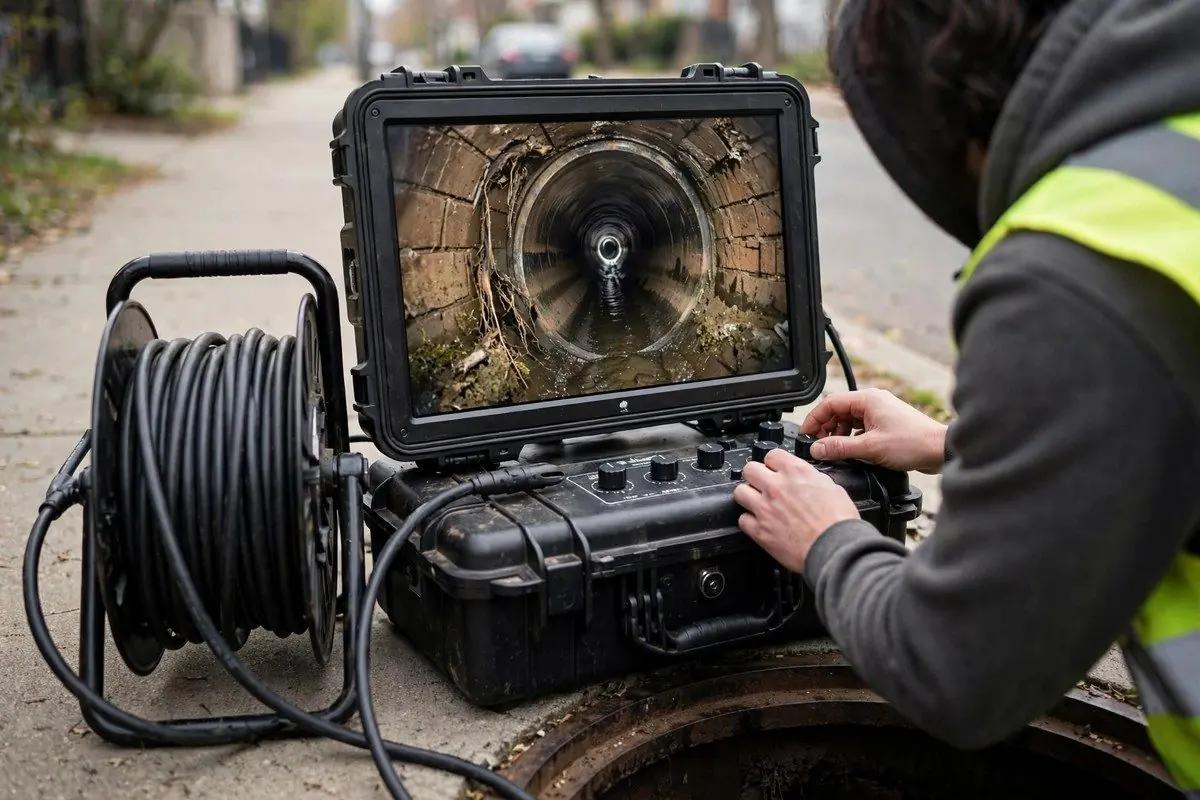
We run the camera, show you the picture as we go and explain what the footage means.
- Recorded camera run
- Home buyer inspections
- Clear explanation of findings
Why inspect the sewer line
The lateral is buried, so problems stay hidden until they cause a backup. A camera finds them early, when a repair is smaller and cheaper, and it can confirm that a line is healthy when you are about to buy.
Repeat clogs are the other common reason. If a cable keeps clearing the same line, the camera shows the reason it fills again.
What the camera can find
Root intrusion
Roots entering joints and filling the pipe.
Cracks and breaks
Longitudinal cracks, broken sections and missing pipe.
Offset joints
Sections pushed out of line by soil movement.
Bellies
Sags where water and waste collect.
Scale and buildup
Mineral or grease deposits narrowing the pipe.
Wrong pipe or tie ins
Mismatched materials or poorly made connections.
Buying or selling a home
A general home inspection does not look inside the sewer line. For an older house, a camera inspection before closing can protect you from a large surprise, and the recorded footage can support a repair credit negotiation.
Sellers also benefit. Knowing the line condition before listing avoids a late discovery that stalls a sale. If the camera finds trouble, we can quote sewer line repair from the same footage.
How the inspection works
Find access
We use an existing cleanout or pull a toilet if none exists.
Run the camera
A flexible cable carries a small camera through the line while a monitor shows the view.
Mark the location
A locator tracks the camera so any problem can be mapped to a surface spot.
Review the footage
We go through the findings with you and recommend only what is needed.
Questions to settle before the visit
Tell us why you want the inspection so we can focus on it. Mention previous backups, the age of the house and any trees near the line, as these help us interpret the footage.
If the line is full of debris, we may need to clear it first for the camera to pass. In that case, drain cleaning or hydro jetting is quoted separately so you can decide.
Reading the footage like a pro
Ask the technician to pause on anything unclear. A shadow can be a stain, a root hair or a hairline crack, and the difference decides whether you need a repair or only cleaning. Clay lines show joints every few feet, which is normal, while a gap or a lip at a joint is not.
Notes matter as much as pictures. We tell you the distance from the cleanout to each finding and the pipe material, so another contractor can use the same report to bid the work. A good inspection leaves you able to compare options instead of depending on one opinion.
How often to inspect
A line in good shape does not need yearly checks. Older clay or cast iron lines, houses with large trees nearby and properties with a history of backups are worth a look every few years, and always before a purchase or a major landscaping project.
A camera report and the code
The Uniform Plumbing Code (UPC) and the California Plumbing Code set a minimum slope and require sound joints in a building sewer. A recorded camera run is the practical way to check a buried line against those expectations without digging.
Book a sewer camera inspection
Call and we will schedule a visit that fits your closing or repair timeline.
Where we inspect
We inspect lines across Oakdale and nearby towns. Buyers in Waterford and Riverbank often book ahead of closing, and we give the findings in plain language.
Questions we get asked
Usually not. A standard inspection looks at the visible plumbing, while a sewer camera inspection looks inside the buried line.
We review the footage with you on site and can share the recording as part of the visit. Ask us when scheduling.
Most take under an hour once the camera is in the line. Cleaning a blocked line first adds time.
Yes, it shows where the blockage sits and what it is made of, which helps us choose between cabling and jetting.
Many older houses have none. We can install one during the visit so future service is simpler.
Still have a question? Call (855) 575-2890 and talk to a plumber.
Know your sewer line condition
A recorded camera inspection answers the question before you buy or dig.
Call (855) 575-2890