
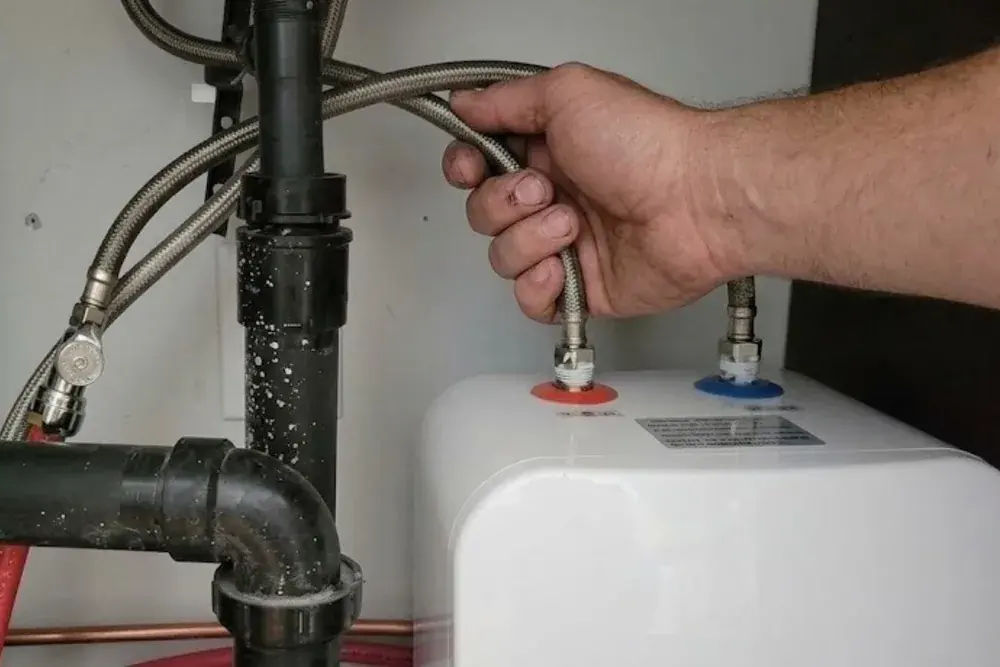
Safe steps for a replacement
Shut off the supply
Close the cold water valve at the heater, and for gas units turn the gas control to pilot or off.
Cut power on electric units
Switch off the breaker so the elements are never energized without water.
Relieve pressure and drain a little
Open a hot tap in the house and drain a few gallons from the tank valve so water stays below the fittings.
Swap the connectors
Disconnect the old hoses, wrap threads as needed and fit new connectors snug but not overtightened.
Refill and check
Open the cold valve, open a hot tap to bleed air, then power up and look for drips.
Never turn on an electric heater before the tank is full. The elements burn out in seconds without water.
When to hand it to a plumber
If the shutoff valve will not close, the fittings are corroded together or the heater is a gas model, call a professional. Forcing an old valve can snap it and flood the area.
We replace hoses, valves and relief lines during water heater repair visits or as part of a water heater replacement or on their own. The same crew serves Escalon and Waterford from Oakdale.
What the hoses connect to
Behind each hose are shutoff valves and fittings that matter as much as the hose itself. A gate valve that has not moved in years can leak at the stem, and replacing it with a quarter turn ball valve makes the next emergency much easier to handle.
The relief valve and its discharge pipe also deserve a glance. The pipe should run down to a safe spot and never be capped. A relief valve that drips can be a sign of thermal expansion or a worn seat, and either is worth fixing while the area is open.
Typical cost and time
Replacing a pair of connectors is a short job, often done in under an hour when the valves cooperate. Costs rise when valves, unions or the relief line also need work, so we tell you which items are needed before we start.
If a heater is near the end of its life, swapping hoses on a tank that will fail next year is wasted money. In that case, price a new heater and compare the numbers.
Flex connectors and earthquake rules
California expects water heaters to be braced against shaking, and the braced tank must still allow some movement at the water connections. Flexible connectors give that room, and rigid pipe does not.
When we replace hoses we also check the strapping, since loose or missing straps are a common finding. A heater that sways can pull a connection loose even if the hose itself is brand new.
A habit worth keeping
Check the heater area twice a year. Look for rust, water marks and crust, and put a drain pan under the heater if the location needs one. A small habit catches most failures before they become floods.
Code and listing for connectors
Water connectors must be listed for drinking water under NSF/ANSI 61 as the California Plumbing Code, based on the Uniform Plumbing Code (UPC), requires, and a gas appliance connector must be listed to ANSI Z21.24. California Health and Safety Code section 19211 requires water heater bracing that still allows the connections to flex.
Common questions
Many pros suggest every five to ten years, and sooner if you see rust, bulges or drips.
No. Always use new connectors with a new heater, because old ones have been stressed and may fail.
An electric heater swap is within reach for a careful homeowner, but gas work and stuck valves should be left to a plumber.
Stop and call. Forcing a seized valve can break it and cause a flood.
Hot garages shorten the life of rubber and plastic parts. A cooler spot or good ventilation helps, and checking connections each fall is wise.
Still have a question? Call (855) 575-2890 and talk to a plumber.