
What a sink filter can and cannot do
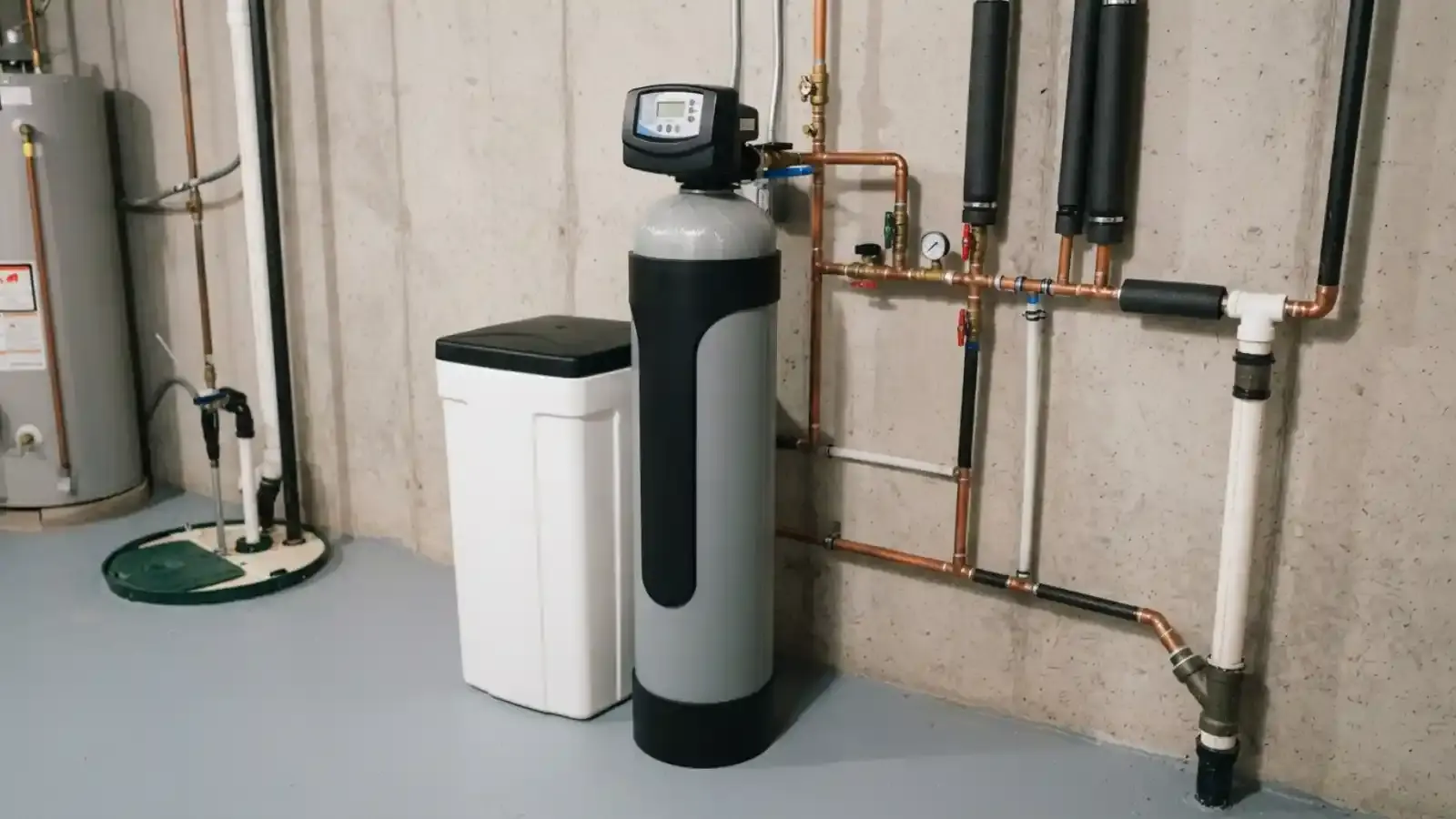
A filter improves taste and smell by removing chlorine and some organic compounds, and certain models cut specific contaminants. It does not soften water, so scale on faucets and in heaters continues unless you add a softener or a scale filter.
Look for NSF/ANSI certification on the box. Standard 42 covers taste and odor, standard 53 covers health related contaminants such as lead and standard 58 covers reverse osmosis. A claim without a certification is only a claim.
How installation goes
Pick the spot
We check the cabinet space, the cold line and the sink for a spare hole or a place for a new tap.
Tap into the cold line
A saddle or tee valve feeds the filter. We use quality fittings and shutoffs so the filter can be bypassed or serviced.
Mount the filter and tap
The housing is fixed to the cabinet wall and the small faucet is set in the sink or counter.
Flush and test
We flush the new cartridge, check every joint for leaks and set a replacement date.
Reverse osmosis adds a drain saddle for wastewater and a storage tank. The extra parts are more likely to leak, so a careful install matters.
Keeping a filter working
Filters work only while the cartridge is fresh. Change cartridges on the schedule in the manual, usually every six to twelve months for carbon and longer for RO membranes, and put the date on the housing.
A cartridge that is past its life can pass trapped contaminants and grow bacteria. If water slows to a trickle or starts tasting odd, change it early. Our faucet repair team can also check the supply lines at the same visit, and the softener and filtration page covers whole house options.
Mistakes that waste money on filters
Buying a system for a contaminant you do not have is the most common one. A fridge filter, a pitcher and a faucet unit may already cover taste, and a bigger system adds cost without changing the result. Another is skipping the certification and trusting a label with a long list of claims.
Space is the third. An RO unit with a tank takes most of a sink cabinet, which crowds the disposal and the cleaning supplies. Measure the cabinet before you buy, and ask for the dimensions of the filter, the tank and the drain connection.
Price and upkeep in plain terms
Faucet and pitcher units cost the least up front and the most per gallon, because cartridges are small and wear fast. Under sink and RO systems cost more to buy and install and less per gallon over time.
Add the yearly cost of cartridges and the time to change them. If you will not remember to change a filter, pick the simplest system that fits your habits, because a neglected filter is worse than none.
When a whole house system makes sense
If you want filtered water at every tap, a whole house carbon filter or a softener is the tool. It costs more and needs more space, but it protects the shower, the laundry and the water heater.
Homeowners in nearby Riverbank, where the city reported harder water, are the most likely to want a softener. Those in Waterford, where the reported water is soft, often need only a drinking water filter.
Why certification beats marketing
NSF/ANSI standards 42, 53 and 58 are published test standards for taste, health related reductions and reverse osmosis. A filter that lists the certification and the contaminants it was tested for is the one worth buying.
Common questions
No filter is required for safety if the water meets standards, but many people use one for taste and extra reduction of specific contaminants.
Standard carbon filters do not. A softener or a scale control system handles hardness.
Follow the manual. Six to twelve months is common for carbon, and a flow drop or off taste means change it sooner.
For drinking and cooking water it gives the cleanest result, though it wastes some water and needs more space and upkeep.
The City of Oakdale publishes its water quality report, and the city can send you the current one if you call. Use it to pick a filter that targets what is actually in your water.
Still have a question? Call (855) 575-2890 and talk to a plumber.