
Simple tests you can try
Check the meter
Turn off everything that uses water and watch the dial. Movement means a pressurized leak somewhere.
Close the main at the house
If the meter stops, the leak is inside the house. If it keeps moving, the leak is outside, between the meter and the house.
Turn off the sprinklers
If the wet area dries, the irrigation line is the likely source.
Note the timing
Does the wet spot grow after rain, after showers or all day. The pattern points to the cause.
Write down what you see and when. A clear timeline helps us choose the right tools on the visit.
How a professional locates the leak
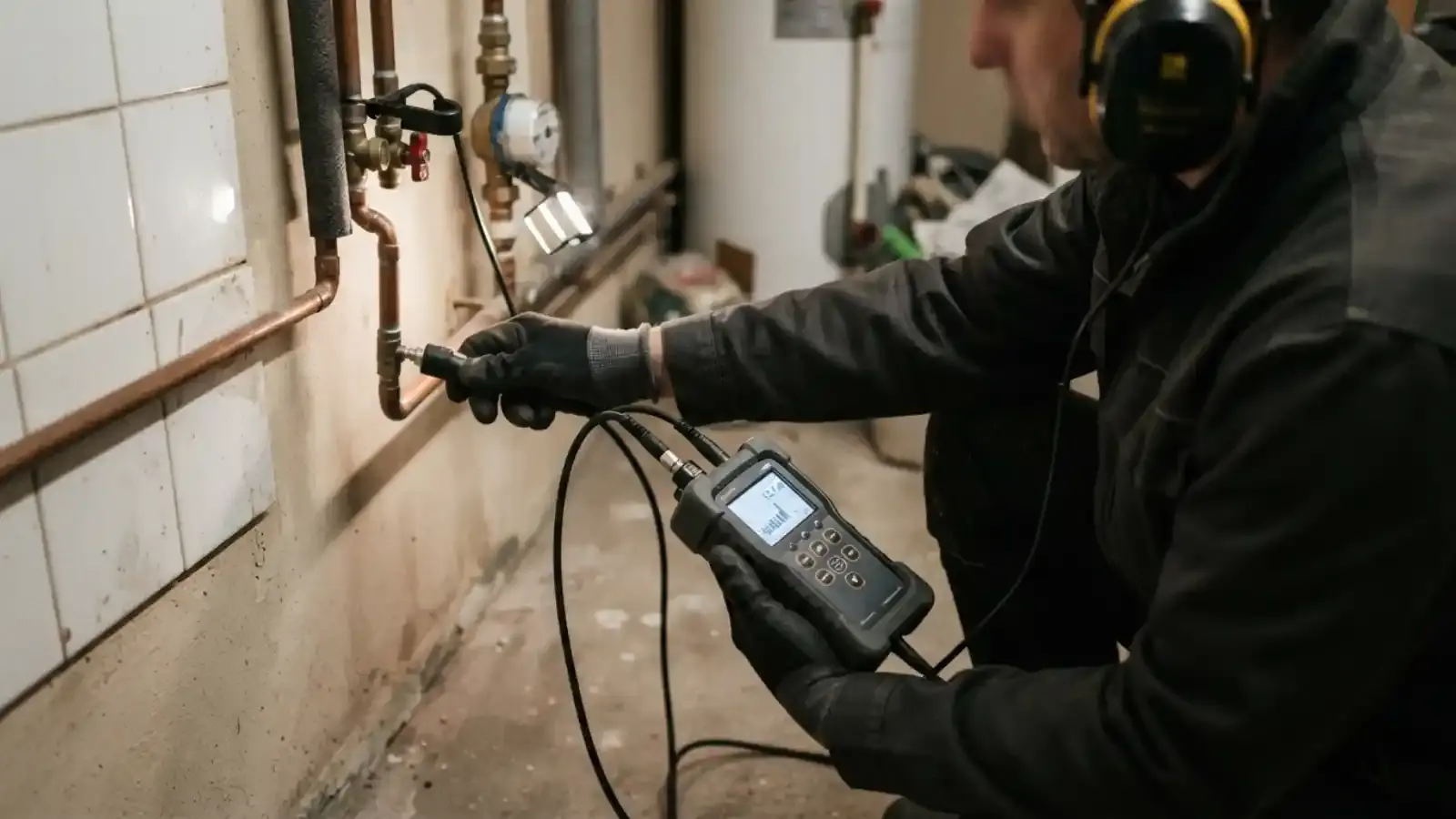
We pressure test the supply to confirm a leak, then use an acoustic detector on the slab or the ground to hear the pipe. A thermal camera and a moisture meter help trace damp paths, and for buried lines we use line tracing to follow the pipe.
A sewer camera checks drain lines for cracks and leaks without digging. When the source is found, we mark it and explain the repair, whether it is a short trench for a water line or a patch under the floor, covered in slab leak repair.
Reading the pattern of the wet area
A circle that grows from one spot suggests a point leak from a pipe or a fitting. A long damp strip along the wall suggests a runoff problem, a drain line or a sprinkler lateral. A wet corner under a hose bib points to the bib.
Photos on different days show whether the area is growing. We can use them to decide where to put the first test, which saves time on the visit and trims the cost of the locate.
Yard, drainage and grading
Not every wet foundation is a plumbing leak. Soil that slopes toward the house, a downspout that dumps at the wall and planters that hold water can all push moisture against the foundation.
Fixing those is simple and inexpensive. Extend downspouts away from the house, regrade soil to slope away and keep sprinklers from spraying the wall. If the area stays wet after those steps, plumbing comes back into the picture.
What to do while you wait
- Photograph the wet area and note when it first appeared.
- Turn off irrigation to test that source.
- Keep soil and mulch away from the foundation vents.
- Close the main shutoff if the water is spreading fast.
We cover Oakdale and nearby towns. Riverbank and Escalon homeowners can start with the same call.
Pressure testing as the standard method
The Uniform Plumbing Code (UPC) uses pressure testing to prove water piping is sound, and leak detection applies the same logic to existing lines. A line that loses pressure while isolated has a leak, and tools then narrow the location.
Common questions
Turn off all water and watch the meter. Movement means a pressurized leak, and a test at the main narrows it further.
Yes. Constant water near a footing can erode soil and cause settling, so fix irrigation leaks promptly.
No. The tools work from the surface, and digging is limited to the repair spot.
Not always. Poor drainage and humidity can cause it too, so testing separates the causes.
No. Rain in the valley falls mostly in the cooler months, so summer moisture usually comes from irrigation or a pipe.
Still have a question? Call (855) 575-2890 and talk to a plumber.